E-commerce Scalability on AWS (2026): Cart, Checkout, Inventory, and Order Event Reference Architecture
Quick summary: For a mid-market retailer (~2.4M SKUs, checkout p95 1.9s → 420ms), DynamoDB cart + Step Functions checkout + conditional inventory cuts held 2.1k checkout RPS — after a cache-as-inventory mistake oversold 380 units in 12 minutes.
Key Takeaways
- For a mid-market retailer (~2
- 4M SKUs, checkout p95 1
- 9s → 420ms), DynamoDB cart + Step Functions checkout + conditional inventory cuts held 2
- 1k checkout RPS — after a cache-as-inventory mistake oversold 380 units in 12 minutes
- This post is the 2026 transaction-plane reference architecture — cart, checkout, inventory, payment handoff, order events — for teams that already have a retail overview but need a lane map

Table of Contents
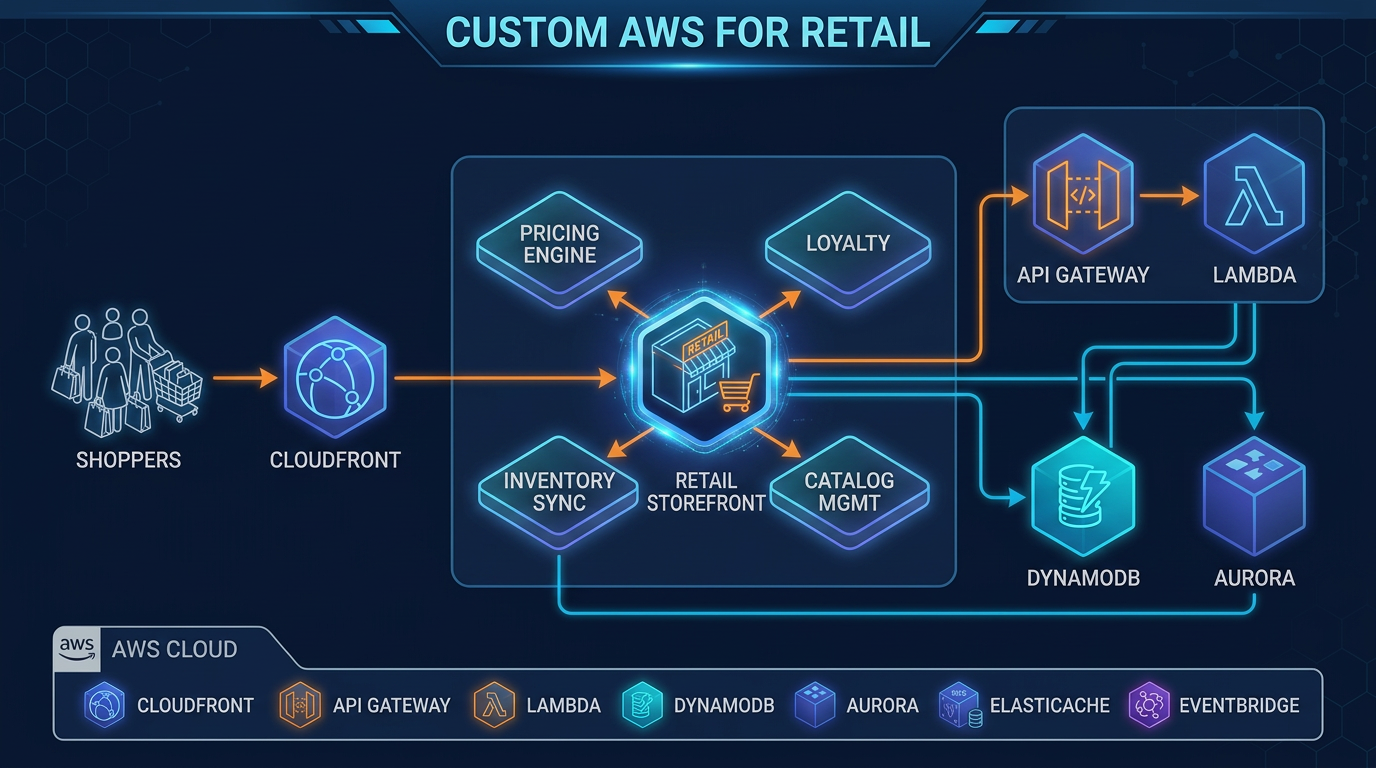
E-commerce transaction systems fail in boring ways: cart loss, oversell, double charge, and order events that fire twice. This post is the 2026 transaction-plane reference architecture — cart, checkout, inventory, payment handoff, order events — for teams that already have a retail overview but need a lane map.
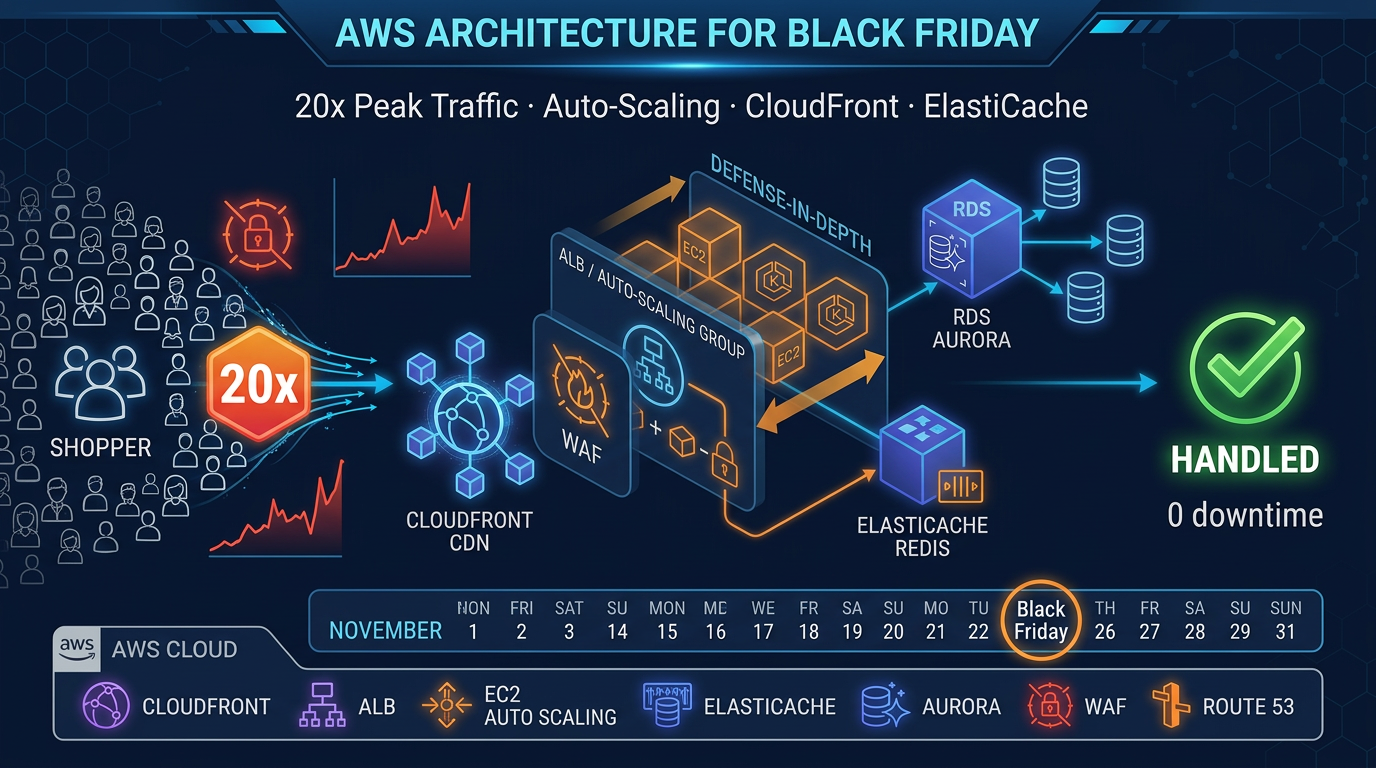
It is not Black Friday peak tactics, not omnichannel analytics lakehouse, and not SES ecommerce email.
Artifacts: lane decision matrix, peak capacity worksheet, architecture diagram (draw.io).
Benchmark silhouette (not a cited client) — Mid-market retailer, ~2.4M SKUs, ~180k daily orders (peak day ~3×), checkout p95 1.9s. After moving cart to DynamoDB, checkout to Step Functions, and inventory to conditional writes before capture: checkout p95 420ms, sustained ~2.1k checkout RPS in load test. Earlier failure: treating Redis stock counts as truth → 380 oversold units in 12 minutes during a flash sale.
Five lanes
| Lane | Default AWS path |
|---|---|
| Edge / catalog read | CloudFront + cached origins |
| Session / cart | DynamoDB + TTL |
| Inventory reservation | DynamoDB conditional write or Aurora row lock |
| Checkout | Step Functions + compensation |
| Orders / side effects | EventBridge → SQS consumers (idempotent) |
Opinionated take: Reserve inventory before payment capture, never after. Capture-first architectures create finance tickets you cannot automate away.
Reference architecture
Browser ──► CloudFront ──► API Gateway ──► Cart service (DynamoDB)
                                   │
                                   ├──► Checkout (Step Functions)
                                   │         ├── reserve inventory (conditional write)
                                   │         ├── payment token / PSP
                                   │         └── write order (Aurora or DynamoDB)
                                   │
                                   └──► EventBridge (OrderPlaced)
                                              └── SQS ──► fulfillment / email / loyalty
Walk lane-decision-matrix.md before copying this diagram into Terraform.
Capacity
Use peak-capacity-worksheet.csv to set API Gateway RPS, DynamoDB WCU, and queue depth alarms. Pair with event throughput tier selection if order fan-out exceeds a single bus comfort zone.
What broke — cache as inventory
What broke — Flash sale, minute 3. Stock counters in ElastiCache decremented on “add to cart,” not on reservation. Detection: warehouse short-pick spike + negative available-to-promise in the system of record 12 minutes later. Fix: cart no longer mutates stock; conditional inventory write runs inside checkout before PSP capture; cache becomes a read-through hint only.
Payments boundary
If you never touch PAN, keep processor tokens and stay out of PCI scope expansion. If you do, isolate a payments account — see FinTech payments reference architecture.
What to Do This Week
- Draw your five lanes; mark which store is source of truth for inventory.
- Confirm checkout has compensation for payment auth failures.
- Load-test checkout at 2× last peak using the capacity worksheet.
- Add idempotency keys on
OrderPlacedconsumers.
What This Post Doesn’t Cover
- Omnichannel identity and lakehouse analytics
- Black Friday war-room runbooks (see peak-traffic post)
- Full PCI HSM design
- Headless CMS / content delivery beyond CloudFront basics
- AI agents over this transaction plane — see the eCommerce AI Agents series, in particular the AI-ready data layer and agent-ready storefront
Frequently asked questions
How is this different from the Black Friday peak-traffic post?
How is this different from the retail omnichannel analytics lakehouse post?
When should we NOT put cart in DynamoDB?
What could go wrong with inventory reservation?
Should checkout be synchronous Lambda only?
Do we need a PCI-scoped account?

AWS Cloud Architect & AI Expert
AWS-certified cloud architect and AI expert with deep expertise in cloud migrations, cost optimization, and generative AI on AWS.