Amazon SES Cold Email for B2B: Compliance and Deliverability Setup (2026)
Quick summary: Legitimate B2B outbound on SES in 2026: sandbox exit, SPF/DKIM/DMARC, RFC 8058, Microsoft May 2025 bars, warm-up, and when Pro DIPs beat shared pools — with a first-party compliance checklist.
Key Takeaways
- Legitimate B2B outbound on SES in 2026: sandbox exit, SPF/DKIM/DMARC, RFC 8058, Microsoft May 2025 bars, warm-up, and when Pro DIPs beat shared pools — with a first-party compliance checklist
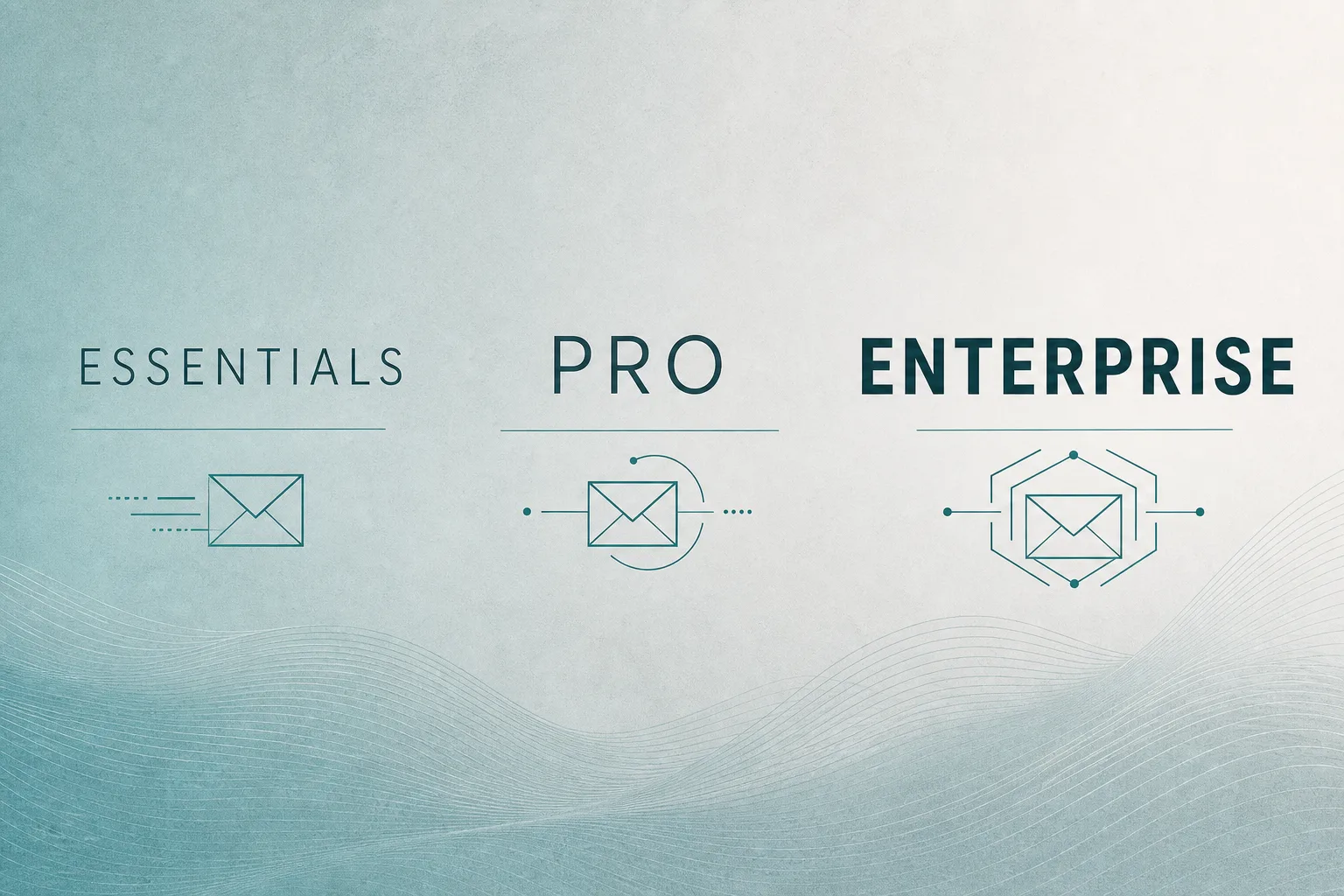
- On July 21, 2026, AWS shipped hierarchical SES pricing plans (Essentials / Pro / Enterprise) while a-la-carte outbound remained $0
- 10 per 1,000
- That billing change landed on top of mailbox-provider rules that have been in force since February 2024 (Google/Yahoo) and May 5, 2025 (Microsoft Outlook consumer)
- If you are evaluating Amazon SES for legitimate B2B outbound — sales, partnerships, recruiting — the hard part is not the API
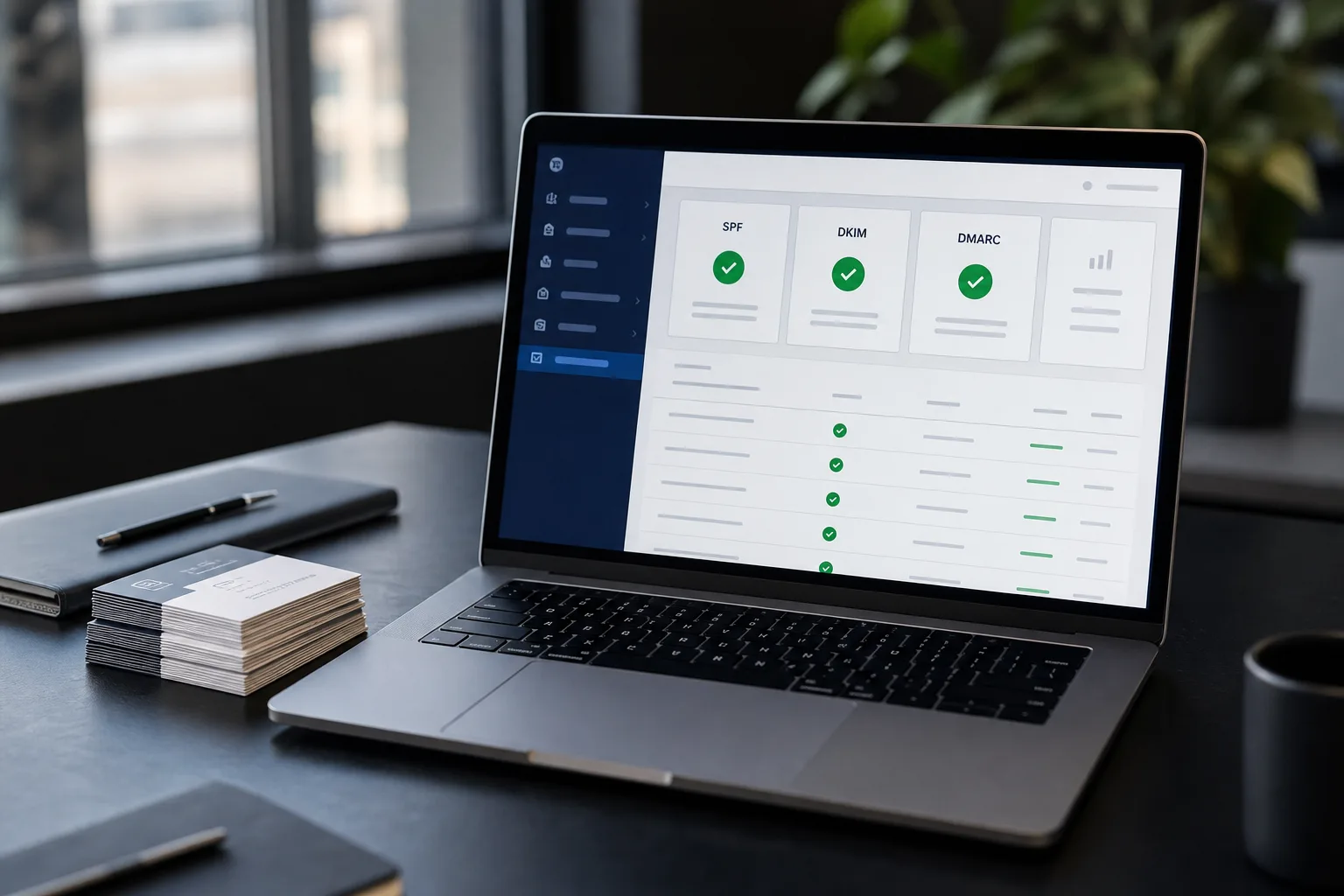
Table of Contents
On July 21, 2026, AWS shipped hierarchical SES pricing plans (Essentials / Pro / Enterprise) while a-la-carte outbound remained $0.10 per 1,000. That billing change landed on top of mailbox-provider rules that have been in force since February 2024 (Google/Yahoo) and May 5, 2025 (Microsoft Outlook consumer). If you are evaluating Amazon SES for legitimate B2B outbound — sales, partnerships, recruiting — the hard part is not the SendEmail API. It is surviving authentication, warm-up, and complaint ceilings without treating SES as a spam cannon.
This guide is for platform and RevOps engineers who already decided outbound belongs on AWS infrastructure. It is not a guide to buying lists or bypassing consent law.
Amazon SES for B2B cold outreach means authenticated, suppressed, warmed sending for business contacts with a documented acquisition path — using configuration-set isolation and (when needed) dedicated IPs or the Pro plan’s managed DIP inclusion — not shared-pool blasts with no opt-out.
What “Compliant Outbound” Means Here
We recommend treating B2B outbound on SES as a compliance + deliverability engineering project first, and a messaging project second. The trade-off: you own DNS, warm-up, and suppression that sequencers hide — and you avoid the false comfort of “the tool said it was fine.”
Minimum bar before volume:
- Legal/privacy owner signs off for CAN-SPAM, CASL, GDPR/UK GDPR as applicable (this post is not legal advice).
- Contacts are business roles with a documented source — not purchased consumer dumps.
- Every message identifies the sender and offers a working opt-out.
- Hard bounces and opt-outs never get another marketing-style send.
Reproduce this — Work the outbound compliance checklist section by section before raising SES quotas. Treat unchecked legal gates as a hard stop.
SES Technical Setup That Outbound Actually Needs
Sandbox exit and quotas
New accounts start in the SES sandbox. Production access requires a use-case description AWS Trust & Safety will accept. Be honest: B2B outbound with opt-out and suppression is a different narrative than “transactional receipts only.” Inflating “transactional” while running cold sequences is how accounts get paused later.
Authentication (non-negotiable)
- Easy DKIM (prefer 2048-bit) or BYODKIM on the From domain
- Custom MAIL FROM so SPF aligns on the bounce domain you control
- SPF includes SES without blowing the 10-lookup limit
- DMARC at least
p=nonewithrua=reporting; plan enforcement if you want BIMI later
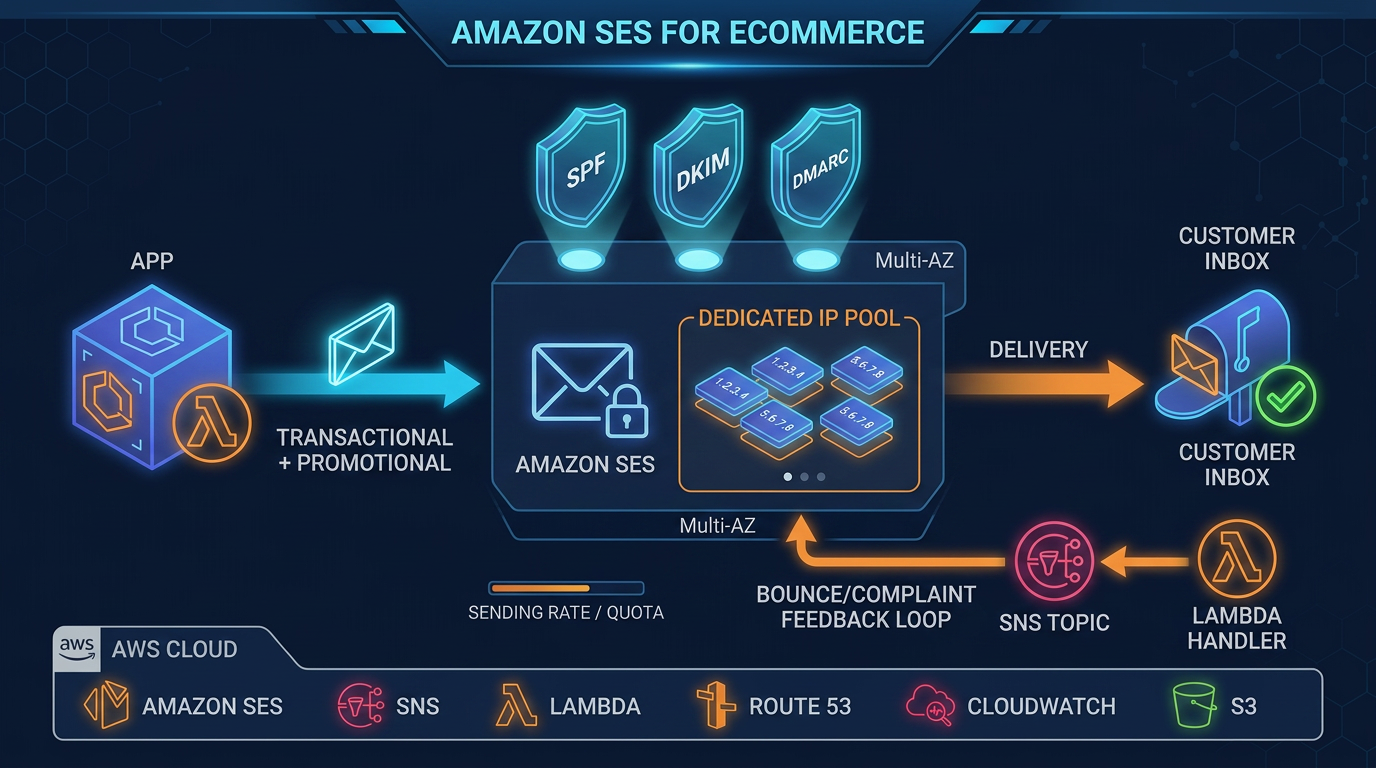
Bulk-sender reality for ~5k+/day to consumer mailboxes: Google/Yahoo (Feb 2024) and Microsoft (May 5, 2025) expect SPF + DKIM + DMARC with alignment. Marketing-style sequences also need RFC 8058 one-click unsubscribe headers — SES does not inject them for you.
Configuration sets and suppression
Create at least one configuration set for outbound (outbound-b2b) separate from transactional. Route bounce and complaint events to SNS → Lambda (or EventBridge) and write suppressions before the next send. Account-level SES complaint risk sits near ~0.1%; that is separate from Gmail Postmaster spam rate (under 0.10%) and the published <0.3% bulk-sender complaint guidance.
Shared pool vs dedicated IPs vs Pro
Shared pools are fine for careful, low-volume B2B. They are a liability when outbound volume can absorb reputation hits from neighbors — or when outbound and transactional share fate.
Dedicated IPs still cost about $24.95/IP/month a-la-carte (managed DIP fees differ). As of July 21, 2026, Pro ($105/account/region/month + plan unit rates) includes managed dedicated IP capacity; Enterprise ($500) adds tenants and Global Endpoints. Do not claim SES eliminates IP charges. Decision math: SES pricing plans guide.
Warm-Up and List Hygiene (Where Most Programs Die)
New dedicated IPs need a multi-week ramp. Start with the most legitimate, engaged business contacts you have. Cap daily volume. Pause on complaint spikes. There is no “day-one 50k cold” path that stays healthy.
Hygiene that matters more than subject-line tricks:
- Suppress hard bounces immediately
- Cap soft bounces then suppress
- Sunset silent non-responders on a written cadence
- Keep transactional password-reset IPs away from outbound complaint risk
What broke (pattern we see repeatedly) — Teams migrate transactional mail to SES successfully, then bolt a cold sequence onto the same configuration set and IP pool. A single bad list upload spikes complaints; password resets start landing in spam the same week. Fix: isolate streams before the first outbound campaign, not after the incident.
First-Party Benchmark: Checklist Coverage, Not Fantasy Open Rates
We do not invent client open rates for cold sequences. What we can publish is a reproducible readiness gate: the checklist has six sections and 30+ binary checks covering legal gates, SES account readiness, IP isolation, mailbox-provider bars, list hygiene, and go-live. Programs that cannot check the legal and bounce-automation rows should not raise volume — regardless of sequencer UI.
Quantified outcome for readers running the gate: if you cannot complete section 0 (legal) and section 1 (bounce/complaint automation) in full, your Monday action is zero outbound volume, not “send smaller.” That single rule prevents the most expensive SES Trust & Safety conversations.
Opinionated Recommendations
| Situation | Recommendation |
|---|---|
| < few thousand B2B touches/day, clean lists | Shared pool + strict suppression + RFC 8058 |
| High daily volume or multi-brand outbound | Dedicated/managed DIP; evaluate Pro |
| Same AWS account as critical transactional | Separate config sets and IP pools (or separate account) |
| Marketers need a sequencer UI | Keep sequencer for UX; send via SES SMTP/API only if you still own auth + reputation |
We recommend SES for B2B outbound when engineering already owns AWS and consent posture is clean; we recommend against SES when the only “plan” is a purchased list and a hope that shared IPs will hide it.
What to Do This Week
- Run the outbound compliance checklist.
- Verify SPF/DKIM/DMARC alignment on a live test message (Authentication-Results).
- Wire bounce/complaint automation before any warm-up ramp.
- Decide shared vs DIP vs Pro using the pricing plans worksheet.
- If you also need lifecycle drips, read marketing automation on AWS.
What This Post Doesn’t Cover
- Jurisdiction-specific legal opinions or CASL/GDPR counsel memos
- Sequencer product comparisons (Instantly, Outreach, etc.)
- Consumer cold-email tactics or inbox-rotation schemes
- Full BIMI / VMC procurement (see the BIMI guide)
For SES implementation help, see Amazon SES consulting and SES migration.
Talk to us about SES outbound architecture →
Frequently asked questions
Can I send cold email on Amazon SES?
When should I NOT use SES for B2B outbound?
Do I need dedicated IPs for SES cold outreach?
What spam rate should B2B outbound stay under?
Does Microsoft affect SES cold email in 2026?
What could go wrong during SES outbound warm-up?

AWS Cloud Architect & AI Expert
AWS-certified cloud architect and AI expert with deep expertise in cloud migrations, cost optimization, and generative AI on AWS.